INOVATEC
Welcome to the Innovation and Technology Center for Education, Sciences and Sustainability at UFMT.
Innovation and technology in:
Digital Technologies
Research and development of innovations in digital technologies applied to the UN Sustainable Development Goals (SDGs).
Education
Research and development of diagnostics, digital technologies, and innovative methods in the field of open, flexible or distance education.
Science
Research and development of new ideas, methods and tools that drive discoveries in the field of science, improving research and expanding our ability to understand and transform the world.
Sustainability
Understanding creative solutions and tools that reduce environmental impacts, optimize resource use and promote more balanced lifestyles. Driving responsible practices, supporting the transition to sustainable economic models and strengthening actions in defense of the planet.
Collaborative Structure
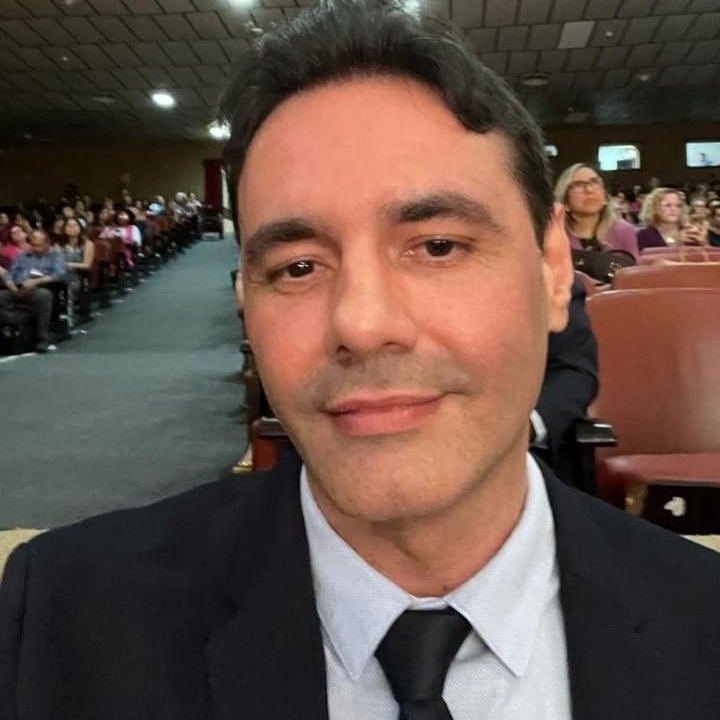
Prof. Dr. Alexandre Martins dos Anjos
Inovatec Coordinator
PhD in Computer Science
Coordinator of the Bachelor's Degree in Science and Technology (UFMT)
Vice President of the Network University Association (UniRede)
Professor at the Department of Computing and Technology, Faculty of Science and Technology - CUVG / UFMT

Prof. Dr. Débora Eriléria Pedrotti
Inovatec Vice-Coordinator
PhD in Biological Sciences
Coordinator of the Natural Sciences and Mathematics Course (UFMT)
Member of the International Network of Researchers in Climate Justice and Environmental Education
Professor at the Department of Computing and Technology, Faculty of Science and Technology - CUVG / UFMT

Gracyeli Santos Souza Guarienti
Inovatec Member
PhD in Environmental Physics from the Federal University of Mato Grosso (UFMT)
Director of the Faculty of Science and Technology – CUVG | UFMT

Prof. Dr. Ana Lara Casagrande
Inovatec Member
PhD in Education
Professor at the Institute of Education - IE / UFMT

Prof. Dr. Marijâne Silveira da Silva
Inovatec Member
PhD in Education
Professor at the Institute of Education - IE / UFMT

Prof. Dr. Lenicy Lucas de Miranda Cerqueira
Inovatec Member
PhD in Sciences
Coordinator of the Science Laboratory Project (UFMT)

Organizational Structure
General Coordination
Strategic leadership and coordination of all initiatives and projects.
Deliberative Council
Governance and important strategic decision-making.
Financial Supervision
Financial management and budgetary control of all operations.
Featured Projects
The Science and Technology Course of the Faculty of Science and Technology (FCT) at UFMT, offered in Distance Education mode, was developed from extensive discussions with the academic community in 2021. Its Pedagogical Project (PPC) reflects the institutional commitment to meet the demands of Mato Grosso society, training professionals with a solid scientific foundation and broad understanding of contemporary technologies. The PPC organizes priorities, actions, and strategies that ensure the development of competencies and skills outlined in the graduate profile, aligning with institutional guidelines, MEC regulations, and national evaluation instruments such as Enade. It is a dynamic document that undergoes periodic evaluations to ensure continuous updating and improvement. Committed to comprehensive training, the course seeks to prepare professionals capable of understanding and acting critically in the social, environmental, political, and economic context in which they are inserted, contributing to the scientific, technological, and educational development of the State.
The Natural Sciences and Mathematics Teaching Degree Course, offered in distance mode by UFMT through the UAB System, aims to train teachers capable of contextualizing teaching to the social, cultural, and economic realities of Mato Grosso municipalities. The training proposal integrates scientific, pedagogical, and didactic knowledge, preparing future teachers to act as transforming agents of society. The course seeks to stimulate scientific curiosity, research, university extension, and citizenship exercise, promoting ethical, critical, collaborative, and socially responsible teaching practice. Graduates are prepared to understand teaching as a cultural practice, valuing diversity, strengthening inclusive education, and using educational technologies and innovative approaches such as STEM. Offered at UAB centers in Cuiabá, Tangará da Serra, Sorriso, and Lucas do Rio Verde, the course aims to train teachers capable of transforming the classroom into a space for research, experimentation, and knowledge construction, mastering theoretical and practical content and applying interdisciplinary and meaningful methodologies. Upon completing their training, graduates will be qualified to teach Science and Mathematics in basic education, committed to learning, human development, and promoting science in society.
It is a training process targeting teachers, especially pedagogical coordinators from the public network in Elementary Education, to reflect on and improve political-pedagogical interventions in school units focused on building School and Community Environmental Projects in states of the North and Midwest regions of the country. The project seeks to understand pedagogical processes with or without the use of communication and information technologies that occur in 11 Brazilian capitals, through their school units, in order to strengthen and understand Environmental Education, with emphasis on Climate Justice, in elementary education.
This project investigates the evolution of technological infrastructure implementation policies in the Mato Grosso state education network. In a context marked by digital culture, it seeks to understand how schools have been equipped to integrate digital technologies into the teaching-learning process. The research will conduct bibliographic and documentary surveys to analyze initiatives such as the Digital Inclusion Program, which in 2016 provided one thousand tablets to state network students, and the EducAção 10-year plan, which in 2024 planned to deliver chromebooks, notebooks, and smart TVs to modernize public education. By mapping these actions, the study aims to offer a clear view of the trajectory of technological policies in the state and their impacts on pedagogical practices.
This project seeks to scientifically investigate innovations in education and technology present in Virtual Learning Environments (VLEs) and digital solutions used in educational contexts. The objective is to understand how these technologies are implemented, what pedagogical practices they promote, and what impacts they generate in institutions, especially in the context of FCT distance education courses and partnerships between INOVATEC and TCE-MT, linked to PPGE/UFMT research. The research, with a qualitative and applied approach, involves literature review, document analysis, case studies, prototype development, and evaluations based on pedagogical and technological indicators. Surveys will be conducted on VLE use, institutional needs diagnoses, analysis of technological solutions, and development of innovation projects. Expected results include the production of technological diagnoses and mappings, creation and evaluation of innovative solutions, and dissemination of knowledge that strengthens and qualifies educational processes in the involved institutions.
This project, developed within the scope of UFMT's Graduate Program in Education (PPGE), focuses on analyzing the use of Artificial Intelligence (AI) in Education, especially in the context of Distance Education (DE). The research is based on a survey using the European Framework for Digital Competence for Educators (DigCompEdu), which identified, among UFMT faculty, the need for institutional policies aimed at strengthening digital competencies, including training actions and encouragement of collaborative work. In this new stage, the study will investigate the challenges faced by educators in using AI services and tools — with emphasis on generative AI — and the legal, ethical, and pedagogical implications of this use. Issues such as the legality and ethics of using content for training AI models will be analyzed, as well as the effects of these technologies on traditional assessment practices. By exploring benefits, risks, and limitations of AI in higher education, especially in DE, the project seeks to contribute to understanding and developing training strategies that prepare teachers and students to deal critically, safely, and efficiently with AI use in the educational process.
This project aims to contribute to improving the quality of distance higher education at UFMT, focusing on the main evaluation indicators: General Course Index (IGC), Preliminary Course Concept (CPC), and National Student Performance Exam (Enade). The research begins with a historical survey of data on these indicators related to the institution's distance undergraduate courses, analyzing their behavior and impact from 2016 to 2021. Subsequently, the results of internal and external evaluations will be examined, relating them to the axes of the National Digital Education Policy and the digital competencies necessary for contemporary education. Based on these analyses, the study seeks to support the definition of improvement strategies for UFMT's distance education courses, contributing to strengthening institutional quality and advancing performance indicators.
System Access
INOVATEC platforms and tools
Convênio TCE-UFMT:
Sistema de Relatórios
Access
Seleção Bolsista - UAB
AccessEdital de seleção de bolsistas, estagiários e colaboradores
Baixar PDFInovatec Online
AccessAVA Escola de contas
AccessAVA - BCT
AccessBanco de currículos
AccessMBA Gestão Estratégica
AccessPré-Enem Digit@l MT
AccessAVA TCE Inovatec
AccessParticipação em projetos do TCE
AccessStrategic Partners

Open Calls
Announcements for new projects and collaborators
CALL FOR SELECTION OF SCHOLARSHIP HOLDERS, INTERNS AND COLLABORATORS
Project: Development of Sustainability and Strategic Management in the State of Mato Grosso, through teaching, research, extension and innovation. Call Period: July 2025 to November 30, 2026